
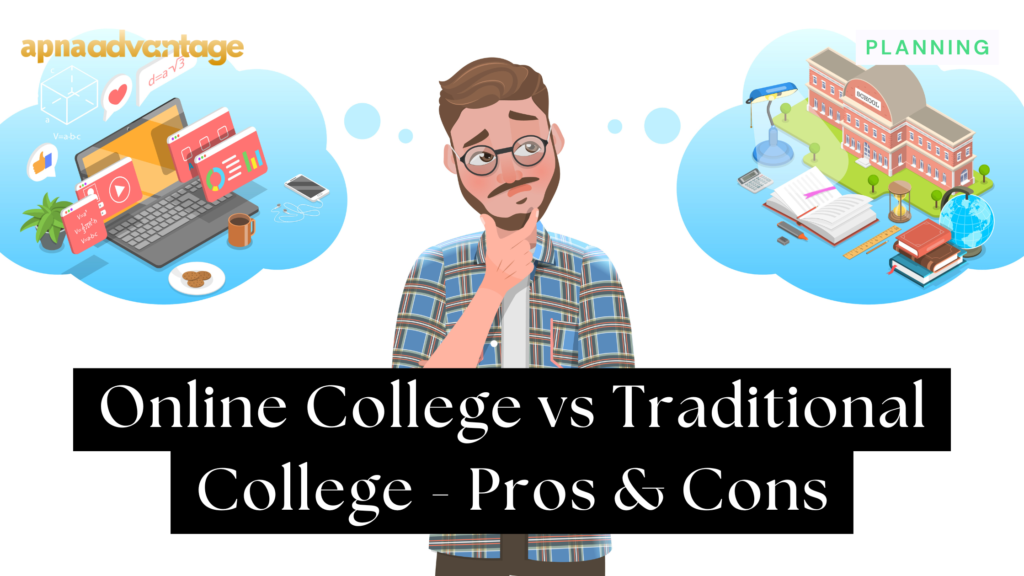
Most students reach a point where they begin questioning the kind of college experience they actually want. Some people crave the energy of a campus, the constant movement, the sense of belonging that comes with being physically present. Others prefer the calm structure of studying from home without dealing with commutes, crowds or rigid schedules. When you start comparing an online college vs traditional college, the decision becomes less about which system is superior and more about which one supports the life you are living right now. Both paths can lead to solid careers, but they shape you in very different ways.
Understanding how these modes work in real-life situations helps you identify the environment where you are most likely to thrive. This guide walks you through each model in a clear and grounded way, so you can see exactly what changes when you go online or stay on campus.
How Online Colleges Shape the Learning Experience
Online colleges have changed the way students access higher education. Instead of travelling to class, you log in from wherever you are. You attend scheduled sessions, watch recordings, chat with peers in discussion spaces and submit all your assessments online. The whole experience revolves around convenience, but it still follows a structured academic plan. Universities that are approved for online degrees maintain proper examination systems and learning platforms, so the overall journey feels more organised than many students expect.
Students today can choose from a wide variety of institutions, including Bangalore University Online, Gla University Online, and universities offering specialised programmes such as Gujarat University Online Courses and Madras University Online Courses.
Online programmes work especially well for people who want to balance studies with work, family or other responsibilities. The flexibility allows students to protect their routine rather than rearrange their entire life around a college timetable. It feels more sustainable, especially when life is already full.
How Online Classes Usually Run
- Scheduled live sessions at fixed times
- Recordings available whenever you need them
- Online assessments and project submissions
- Group collaboration tools for teamwork
- Virtual support from faculty and coordinators
The online approach reduces travel effort and gives you control over your study environment. You can learn early in the morning, late at night or during free hours between work. It removes the pressure of being physically present and lets you absorb lessons at your own speed.
Strengths of Online Colleges
- Flexible schedule that adapts to your routine
- No relocation costs or travel stress
- Suitable for working students or parents
- Access to learning materials round the clock
- A comfortable space for quieter learners who prefer calm environments
Limitations of Online Colleges
- Networking requires personal effort
- Fewer opportunities for spontaneous interaction
- Some programmes may lack offline-level practical exposure
- Home environments can be distracting without discipline
Even with these limitations, online colleges have grown more advanced over the years. Many now integrate digital labs, interactive workshops and industry-linked sessions that mimic real-world scenarios. The quality depends on the university, but the systems behind online learning have become far more robust.
What Traditional Colleges Offer Beyond the Classroom
Traditional colleges carry an atmosphere that shapes students in ways online programmes cannot fully replicate. The campus environment itself becomes part of your education. You attend classes in person, talk to your classmates, sit for group work, join clubs and build small moments of confidence without even realising it. This physical routine teaches you how to navigate people, situations and deadlines, which helps later in professional settings.
Students who enjoy collaborative learning usually feel at home in traditional colleges. The conversation during lectures, the immediate feedback, the unplanned exchanges in corridors, all of this creates a steady rhythm that supports personal growth.
What You Experience in a Traditional College
- Face-to-face teaching with real-time discussion
- Access to labs, studios, libraries and campus facilities
- Events, seminars, clubs and student communities
- Internships supported by university networks
- Structured timetable that builds consistency
A campus environment makes it easier to interact with people from different backgrounds. It gives space to experiment, make mistakes and learn through social exposure. For many freshers, this becomes an important phase where academic learning and personal development grow side by side.
Strengths of Traditional Colleges
- Rich campus interaction and strong peer bonding
- Better access to hands-on practical learning
- Immersive teaching with immediate faculty guidance
- Campus placements that connect students directly to employers
- Natural development of teamwork and communication skills
Limitations of Traditional Colleges
- Higher living and travel expenses
- Limited flexibility in daily routines
- Relocation may be necessary for many students
- Demanding schedules that can clash with part-time jobs
Traditional colleges are powerful for students who thrive in interactive social environments. However, the structure does not suit everyone, especially learners who need flexibility because of work, family obligations or health-related reasons.
Academic Recognition and Legitimacy in Both Models
Students often worry about how online and traditional degrees are viewed by universities, employers and government bodies. The reality is that recognition depends on the institution, not the format. A degree issued by a properly approved university holds value whether it is earned online or offline.
Recruiters care about what you learned and how you apply it. They look at your projects, communication skills and attitude. Many companies now employ online degree graduates without hesitation. For traditional students, the campus placement system sometimes speeds things up, but it does not make the degree itself more legitimate.
Students comparing institutions often review options available through Bangalore University Online or explore specialised offerings such as Gujarat University Online courses to ensure their qualifications align with industry expectations.
Both models carry weight when backed by recognised institutions and sincere effort from the student.
Daily Life Differences Between Online and Traditional Colleges
Before choosing a path, it helps to picture how your days would look. Students often underestimate how much daily routine influences academic performance.
If You Study Online
- You decide when and where to watch classes
- No travel fatigue
- More time for work or personal activities
- Distractions need stronger internal control
- Group work requires digital coordination
If You Study on Campus
- Regular travel or residence in hostels
- Face-to-face dynamic contributes to confidence
- Assignments are easier to organise with classmates
- College activities create social pressure and motivation
- The schedule leaves less flexibility
Both experiences teach you something different. Online teaching teaches independence, time management and digital communication. Traditional learning teaches collaboration, adaptability and interpersonal confidence. Neither is superior on its own. Your lifestyle decides what is more sustainable.
| Feature | Online College | Traditional College |
| Learning Style | Live + Recorded sessions | Classroom-based teaching |
| Flexibility | Very high | Low to moderate |
| Cost | Moderate, no relocation | High due to travel and accommodation |
| Peer Interaction | Limited but possible online | Naturally strong |
| Practical Exposure | Depends on digital tools | Built into campus activities |
| Best For | Working or remote students | Freshers or collaborative learners |
Each model fits a different type of student. Someone with a job will lean online. Someone starting their academic life fresh may find campus experiences more rewarding. The comparison helps you spot what you value most.
Which Students Benefit the Most From Each Style
Instead of picking a degree type because others prefer it, match it to your personality, daily load and long-term plans.
Online College Fits You If:
- You need flexibility around work
- You live far from major education hubs
- Home feels like a more comfortable learning space
- You prefer absorbing lessons at your own pace
- You want lower total expenses
Traditional College Fits You If:
- You learn well through discussions
- You want steady peer support
- You enjoy campus life and in-person activities
- You want strong involvement in practical sessions
- You prefer direct interaction with mentors
Students researching online education opportunities often compare institutions with rankings and city-specific options, including guides on Top Online Colleges in Mumbai, before making a final decision.
These choices depend on how honest you are about your lifestyle. The right academic environment is the one you can sustain without affecting your health, focus or peace of mind.
How Recruiters Evaluate Students From Both Colleges
Recruiters look for readiness. They want candidates who can communicate clearly, understand concepts well and adapt to new tasks. When comparing graduates from an online college vs traditional college, employers rarely differentiate based on mode alone. They care about performance, maturity and the university’s reputation.
In some cases, traditional colleges give an advantage because of structured placements. However, online graduates often continue working while studying, which adds practical experience to their profiles. Both strengths matter in modern hiring systems.
Many employers recognise graduates from established institutions, whether they studied through Gla University Online, completed Madras University Online courses, or attended a traditional campus programme.
What employers prefer is balance. They want candidates who can speak confidently, present ideas, collaborate with teams and solve problems. Students from both formats can succeed if they build skills actively during their course.
How Apna Advantage Helps You Choose the Right Format
Many students find the decision easier once they see real data side by side. Apna Advantage offers a simple way to compare online and traditional colleges through fees, approvals, course structure, faculty details and placement insights. You can filter by your goals and get a clearer sense of which model supports the future you are aiming for. It saves time and gives you a realistic picture rather than relying on scattered information or assumptions.
A Closing Perspective to Help You Make the Decision
Every student has a different life and a different rhythm. There is no universal best choice. Online colleges offer freedom, affordability and control. Traditional colleges offer immersion, discipline and community. Your job is to recognise which environment helps you stay consistent, motivated and confident. Once you see that clearly, the confusion between the formats becomes much easier to navigate.
If you want a cleaner view of universities offering both online and traditional programmes, Apna Advantage can guide you. Compare details quickly and choose the format that fits your goals without overthinking the process.
FAQs
1. Are online colleges recognised the same as traditional colleges?
Yes, online colleges approved by UGC hold the same academic validity as traditional colleges. What matters most to employers isn’t where you studied, but whether the school is trusted, what abilities you show, and how well you handle tasks or job chats. Being accepted depends on official approval – not if classes were live or remote – so either path can lead to solid jobs if picked smartly.
2. Which option offers better placement opportunities?
Colleges with physical campuses usually hook students up with jobs via on-site hiring events. That way, learners can reach employers without much hassle. Virtual schools sometimes assist with job hunts – though it really depends on which one you pick. What you get out of it ties back to how sharp your skills are, what’s in your work sample pack, alongside how clearly you express yourself when interviewed, no matter if classes were online or in person.
3. Can online college students switch careers successfully?
Yep, plenty of people taking classes online shift paths by working on hands-on projects, picking up certifications, or getting real-world experience while they earn their degree. Since it’s flexible, they can learn new stuff without quitting their day job. What really matters for switching careers isn’t if school was virtual or in-person – it’s steady progress and a solid body of work that counts.
4. Are traditional colleges better for freshers?
Starting college can feel tough, yet many newcomers gain confidence through campus life. Social interactions build teamwork while daily chats improve how they express themselves. Some schools lay out straightforward routes to jobs or trial work positions. Still, learners who like peace at home or aren’t able to move might do just fine studying online – as long as they keep pushing forward.
5. Do employers treat online degrees differently?
Most employers evaluate performance over the mode of study. When a diploma is from an approved school, and the graduate can talk through ideas without confusion, the learning method won’t hold them back. Hiring folks who focus more on handling tough tasks, getting thoughts across, adjusting to change and real-world projects. That’s why learners from any background might do just as well.
6. Which format gives better practical exposure?
Folks at regular schools usually get real-life practice via lab time, shop classes, or events on campus. Web-based programs give digital labs, mock scenarios, or pro talks – but how solid that is depends on the school. Students should check curriculum details and industry tie-ups before enrolling to ensure they get the practical experience they need.