
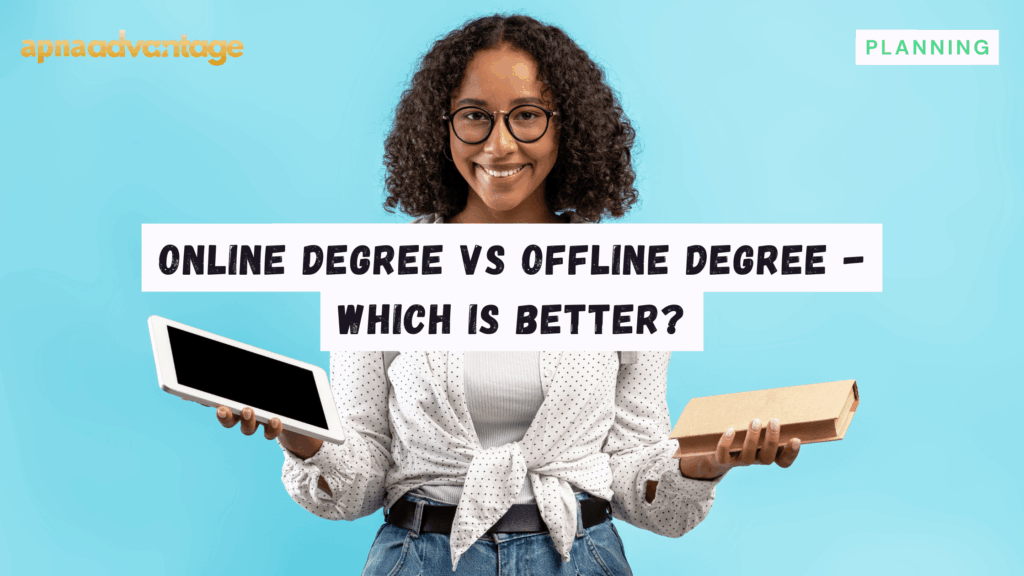
Gone are the days when students had to have the same education system as everyone else. There used to be a system of education where students finished school, went to college, listened to the professors, and eventually received their degree. However, due to the advancement of the Internet and remote working, different paths can be taken when it comes to career planning. Now, students are faced with the first big decision of their adult life learning path. You can choose to go for online classes or take in-person classes.
Choosing your learning method is your first big life decision, and it isn’t as simple as it sounds. Your decision will be based on your brain chemistry, your ability to manage time, your chosen career path, and, of course, your preferred working environment. Some students study well in active, loud classrooms, whilst others are better suited to calm, quiet spaces. It is advisable to understand your learning style. Choosing the incorrect method could lead to disengagement, a possible feeling of burnout, or even a loss of money.
In this blog, we will analyse learning styles, career paths, and personality types to make this decision as simple as possible for you.
Why This Comparison?
First and foremost, we need to discuss the thought process behind the comparison. For many years, online degrees were viewed as a last option and far from a first choice. Today’s modern world has a vastly different mindset. For the first time on a global scale, it’s possible to earn a degree from an elite institution online, and governing bodies are bestowing the same accreditation to those degrees as they do for traditional degrees.
Now, with this new development, learning is possible from areas of your convenience, and all you have to do is choose an area that complements your learning style the best.
The In-Person Learning Experience
For most people, the definition of in-person learning is travelling to a location at a time to learn with a group of people. However, what does this do to your brain, and what does this do to your habits? Let’s find out.
Structure and Focus
The most important part of in-person learning is the regularity of it. For a lot of students, the journey to the campus initiates a cognitive process that signifies the brain’s readiness for work. Your home is filled with distractions, and school provides a plethora of cognitive focusing resources in the form of books, libraries, and classrooms.
Social Skills and Teamwork
Learning in-person helps you gain more than what is in the curriculum. You learn to work with people of different personalities, and to understand how to use body language, and resolve conflicts in a team. These soft skills are, to a large extent, impossible to gain through learning from a screen. In-person learning is great for people who gain energy from others and need that social interaction to be driven.
Support
In a classroom, interaction happens on the fly. If you are confused, you only need to raise your hand, and the teacher can help you out as best as she can. There are cases in which the teacher sees that a different concept is unclear and, therefore, does not allow students to develop misconceptions that are detrimental to their understanding of the issue.
In-Person Learning Summary
In-person learning is best for making friends and boosting self-esteem. Additionally with getting some help at the moment.
There are many online courses from many different universities around the world. This means there are people from different areas of the globe attending the same courses, but it wouldn’t be without its problems. For example, being enrolled in a course means being charged a fee for it, and to add to the problem, there are course deadlines.
Online Learning Process
When people think of online classes, many think it is the same as simply “watching videos”. This is a common misconception and is false. The teachers do not just record a lesson on a subject and post it to the internet. The technology they use is called a virtual lab. This is not the only type of technology they use; they also have automated graders, as well as online discussions.
Flexibility
When a student is online, this means they have the freedom to choose the time and place to do the work. This is a freedom that is traditionally taken away from students in a classroom. The teacher does not wait for people to finish their work; they just keep going with the lesson. There is no going back with the lessons, and there is no going back on the videos.
Self-Regulation and Responsibility
In online classes, teachers do not mark drill attendance. This means it is the job of the student to demonstrate self-control and discipline. This is a quality that all employers look for. Finishing an online degree while working is a strong example of self-responsibility and work ethic.
Having a Global Network of Educators
Without the limitations and confines of a physical classroom, the online education model incorporates an untethered approach. As an example, you could be in Pune and collaborating with a teacher in London. Online degree programs also offer great opportunities to learn with and from people of diverse nationalities, professions, and work experiences.
Final thoughts on online learning
Self-paced and financially conscious people will find online learning to be the most suitable.
A lot of self-discipline will be required on your part, and you may feel lonely if you do not communicate with other people.
What Should You Prefer, and How Do You Choose?
This is a matter of personal preference, and there is a wide variety of learning styles. These include Visual, Auditory, and Kinesthetic, while also incorporating Social or Solitary. Here’s a breakdown of the comparison of learning modes, whether online or in-person, and the associated learning style.
1. Visual Learner
Definition: You learn by seeing. You tend to prefer material represented in diagrams, charts, etc, or written instructions.
The result: Online learning is usually better.
In online courses, it is usually easier to see the graphics, and they are often clear and interactive. You are free to zoom in, take screenshots, and study at your own pace. You may be seated in a back row and unable to see everything in a large lecture hall.
2. Auditory Learner
Definition: You gain the most learning through listening and speaking processes. Your retention of verbal communication is more effective than that of written communication.
The Outcome: You are able to take advantage of both learning styles.
With in-person learning, you can benefit from hearing the teacher talk and give instructions, and from hearing the debates and discussions. In online courses, you can listen to the same audio lecture as many times as you wish, as well as listen to audio textbooks and podcasts. If you learn best by arguing and discussing, you should choose in-person learning. If you learn best by listening and concentrating, then you should choose online learning.
3. Kinesthetic Learner
Definition: You learn best through movement. You learn best when you can manipulate, build, and move materials, rather than be sedentary.
The Outcome: In-Person learning wins here.
While software that enables users to create 3D models is improving, there is still no replacement for a real chemistry lab or workshop. Some aspects of both the design and technical disciplines are impossible to create with simulated materials, and must be done with real materials that are only available in a college or school campus.
4. The Social Learner
Characteristics: You like working in a team. You value the exchange of ideas.
The Verdict: In-Person learning wins here.
Having a conversation in the chat is different from talking over lunch in the cafeteria or studying with your friends until late. Most social learners are at the highest risk of feeling unmotivated because they don’t have any learners around.
5. The Solitary Learner
Traits: You like working alone and do not like working in groups.
The Verdict: Online Learning wins.
This is ideal for people who enjoy solitude. You have control over your workspace, the noise level, and you can focus on the lesson without social distractions.
Learning Styles & Formats in Online vs In-Person Learning
| Learning Style | Online Learning Suitability | In-Person Learning Suitability | Why? |
| Visual | High | Medium | Digital tools give you better control over what you see. |
| Auditory | High | High | Depends on if you prefer recordings or live talks. |
| Kinesthetic | Low | Very High | You need physical labs and hands-on practice. |
| Social | Medium | Very High | Campus life helps with group motivation. |
| Solitary | Very High | Low | Online creates the quiet space solitary learners need. |
What Should You Choose As Per Your Lifestyle?
Sometimes it is not about how you learn but about your life stage and your goals. These practical matters often determine the winner between online learning and in-person learning.
For the Working Professional
If you already have a job, it is an expensive opportunity cost to leave it for a degree. You are losing not just your salary, but also two years of experience.
The answer is online learning. You get to acquire new qualifications, and most importantly, you don’t have to stop your career. In fact, what you learn today can be applied to your job tomorrow.
For the Career Switcher
Complete career shifts, such as from marketing to data science, often require a new environment.
For such cases, in-person learning is quite advantageous. This is because you can create professional connections and even access job placement services at the campus. This is no longer true, however, for many online bootcamps which offer job placement services comparable to those of physical colleges.
The Guidance
These options can be overwhelming. Apna Advantage is one such option. They don’t just tell you what colleges to choose. They ease the burden of evaluating job and study goals. You can evaluate colleges or find an online degree that offers job assistance as good as an offline degree, so that you don’t miss out on a successful career just because you settled for a non-flexible option.
Understanding ROI
On a final note, let us not ignore the most important thing: money.
In-Person Learning is expensive
In addition to college tuition, you must also pay for housing, transportation, meals, and activities. In some major Indian cities, the cost of living is even higher than the cost of attending college.
Money is Saved by Online Learning
Typically, Online Degrees cost 30%-50% less. You also avoid the ‘hidden costs’ of living in a dorm, transportation, and the purchase of pricey textbooks.
Money Well Spent: If you obtain the same degree for a fraction of the cost and continue to receive a paycheck, the benefits of Online Learning increase significantly.
Will An Online Degree Be Worth In 2026?
Students’ top concern is the degree’s worth. Will a company hire me if my degree says Online?
The honest answer? It depends on the job, but the job set is expanding.
In technology, business, and startups, the job title is more important than how you were educated. Recruiters value your competencies and your exhibits. Actually, obtaining a degree in a field in which you have worked online demonstrates a high degree of diligence and productivity on your part.
In certain older sectors, such as research or governmental work, some participants may take a slight bias in favour of having wholly in-person degrees. This is largely due to their preference for more practical, laboratory-type work.
However, in the eyes of India’s UGC, an online degree from a recognised university is comparable to a regular degree. The legal value is identical. The only disparity is in the perception of the hiring manager, and they are increasingly prioritising skills over the method of instruction.
How Apna Advantage Helps You In Choosing Appropriate Programs
There are many universities and courses available, which can make decision-making more difficult. Is an online MBA superior to a distance MBA from another university? Should I choose the more expensive in-person university?
Apna Advantage simplifies this process by:
- Comparison: You can do side-by-side analyses of online and in-person universities. You can compare costs, faculty, and job placement statistics.
- University Legitimacy: There are many risks involved with online programs, one being receiving a fake degree. Apna Advantage only promotes legit universities so your degree is secure.
- Guidance: If you prefer to speak to someone, you can. Their counselors access your profile and advise you on what option aligns best with your aspirations.

Should You Opt For Online or In-Person Learning?
If you are still indecisive, the following outlines will help you determine what option would suit you.
In-Person Learning Is Best When:
- You are an 18 to 22-year-old who wants the full college experience.
- You are a person who struggles to initiate tasks independently.
- You are in a field that is largely hands-on/ practical (like Medicine or Engineering).
- You are able to afford the tuition and living expenses.
- You want to create and foster professional relationships with others.
You Should Opt For Online Learning When:
- You are in a job that you are not willing to leave.
- You are the kind of person who prefers flexibility in your schedule.
- You are on a tight budget.
- Your preferred university is far, but you want the degree from that institution.
- You would rather have a degree than experience the campus lifestyle.
Conclusion
Both sides of the online learning and in-person learning debate have their pros and cons. The best type of learning ultimately depends on your situation.
In-person learning helps you build community and social interactions. While online learning allows you greater flexibility and the capability of shaping your future and career.
Both learning methods will continue to evolve and overlap over time. But for each individual, you must know yourself. Learning style, financial limitations, and career goals are all important to consider. In the end, whether you are learning in your room or in a hall, it is all in the pursuit of the same goals: personal development and a better future.
If you are interested in starting, Apna Advantage is a good place to look at for help on what universities suit your needs.
Frequently Asked Questions (FAQs)
1. Do employers in India respect online degrees?
Yes, they do. If the degree comes from a university recognized by the UGC and DEB, it is valid for government jobs and private companies. Most employers today focus on your skills and how well you do in the interview, not just how you got the degree.
2. Can I switch from online to in-person classes later?
Usually, no. Universities treat online and campus groups separately. They have different fees and rules. You would likely have to start the admission process again. It is better to choose the right one from the start, using a tool like Apna Advantage.
3. What learning style works best for online education?
Visual and Solitary learners usually do best online. If you learn well by reading, watching videos, and being in a quiet place, you will likely succeed. Auditory learners can also do well if the course has good video lectures and podcasts.
4. Is online learning cheaper?
Yes, almost always. The fees are lower because the university spends less on buildings. You also save a lot of money on rent, travel, and daily expenses.
5. How can I network if I study online?
You have to be active. You cannot rely on chatting in the hallway. You must join online discussions, connect with classmates on LinkedIn, and attend virtual events. Many online programs also organise online meetups to help students connect.
6. Does Apna Advantage charge for help?
No, Apna Advantage does not charge students. Counselling and comparison services are completely free. Apna Advantage helps you find the right university and course without any cost.