

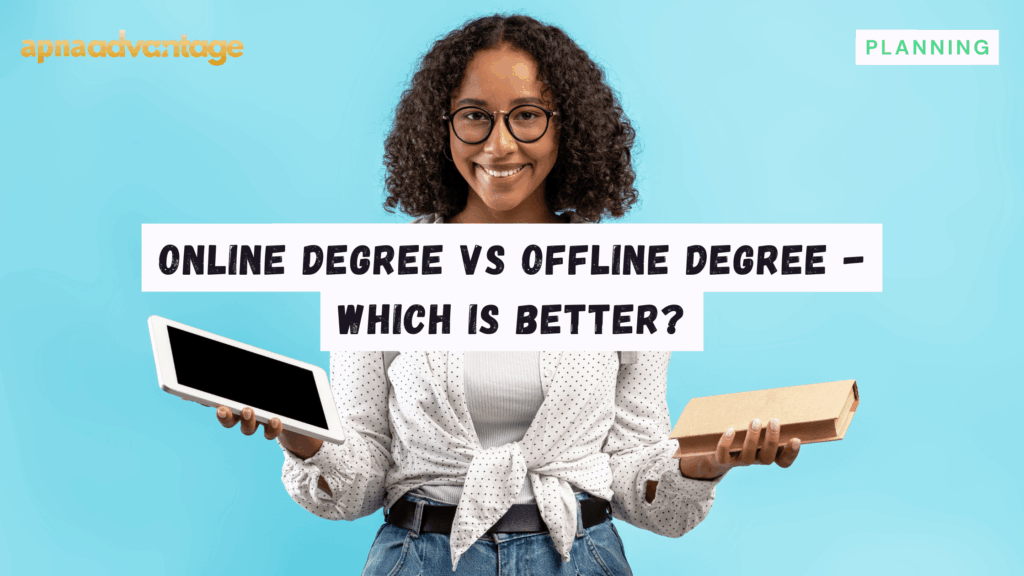
Choosing between an online degree and an offline degree feels almost like choosing between two different ways of living. One gives you flexibility, the other gives you structure. One lets you stay where you are, the other pulls you into a campus routine. When you start comparing an online degree vs an offline degree, the real question is not which one is better overall, but which one works better for the kind of life you already have. That is usually where most people get stuck, because the decision is not as simple as picking what looks modern or traditional. It comes down to learning style, time, cost, confidence and the future you are trying to build.
Understanding how both formats run in real, everyday situations helps remove most of the confusion. This guide breaks down the experience, the challenges and the outcomes of each path so you can make a decision that actually fits you.
How Online Degrees Work in Practice
Online degrees have become mainstream in the last few years. They run through university learning platforms and follow academic structures similar to offline programmes. You watch live or recorded classes, complete assignments online, join discussion groups and appear for proctored exams. Universities approved by UGC offer degrees that are fully recognised and carry the same academic value as their on-campus versions.
Online degrees create a learning space that blends flexibility with accountability. You learn from wherever you are, but the coursework is organised well enough to keep you on track. The right programme can feel surprisingly structured, just without the travel and daily classroom pressure.
What You Typically Get in an Online Degree
This format suits students who want to keep learning but cannot shift cities or commit to a tight physical schedule. If you have work, family or personal commitments, an online degree lets you grow academically while staying rooted in your routine.
- Scheduled live classes delivered virtually
- Recorded sessions available for revision
- Online submissions for projects and quizzes
- Discussion forums for doubt-solving
- Proctored online exams
- Remote access to study resources
Where Online Degrees Excel
Transitioning from this mode to offline expectations can be a bit strange at first, but once students experience the independence and control, they often prefer the online rhythm.
- Strong flexibility for working professionals
- No relocation or travel expenses
- Self-paced revision with recorded content
- Comfortable environment for introverted learners
- Balanced structure for people with multiple responsibilities
Possible Challenges in Online Degrees
Even with these challenges, online programmes today offer far better academic engagement than they did years ago. Many institutions now include virtual labs, industry partnerships and live workshops, which improve learning quality significantly.
- Limited campus interaction
- Networking relies on personal initiative
- Practical exposure depends on the university’s design
- Requires discipline in a home environment
What an Offline Degree Looks Like on the Ground
An offline degree is built around campus life. You attend classes in person, engage in real-time discussions and form natural connections with peers and faculty. It is the format people recognise most because it has been the standard for decades.
Offline degrees shape students through structure. You wake up, attend classes, work on group assignments, take part in events and move through the programme at a steady academic pace. The physical environment gives you exposure to different personalities, situations and learning styles.
Key Elements of an Offline Degree
Students who enjoy a lively learning environment often prefer offline degrees because they offer a sense of community and routine. You learn by being present, observing how people work, and reacting to real situations as they unfold.
- Daily classroom sessions with direct faculty interaction
- Access to the library, labs and academic facilities
- Campus events, clubs and extracurriculars
- Internships supported through university networks
- In-person assessments and evaluations
Strengths of an Offline Degree
Offline learning has its own charm, but it also demands that students adjust their lifestyle to the campus timetable. For some people, this works beautifully. For others, it becomes a burden that limits their ability to manage work or personal responsibilities.
- Naturally stronger peer networking
- More immersive teaching and faster feedback
- Structured pathway that keeps students on track
- Campus placement opportunities
- Development of communication and social skills
Limitations of an Offline Degree
- Higher overall cost due to travel and accommodation
- Fixed schedule with little room for personal flexibility
- Commuting stress for many students
- Less suitable for working professionals
Recognition and Validity: Are Both Degrees Treated the Same?
The biggest hesitation for many students comparing online degree vs offline degree is whether employers treat them equally. The answer is simple: if your university is recognised by UGC and the programme is approved, the degree is valid regardless of delivery mode.
Recruiters care more about:
- The reputation of the university
- The skills you show in interviews
- Your projects and internships
- Your communication and clarity
- Your overall academic record
An offline degree does not automatically guarantee better acceptance. An online degree is not considered inferior if it comes from a credible institution. The difference appears only when students choose universities without approvals or without strong academic support.
In today’s hiring environment, employers look for people who can think clearly, solve problems and communicate well. The mode of the degree matters far less than it used to.
Cost, Convenience and Learning Environment: Major Differences
To help you understand the separation between both paths, this is a structured comparison of what changes in your academic life when you choose one over the other.
Online Degree
- Lower cost overall due to no relocation
- Flexible schedule with recorded classes
- Comfortable learning from home
- Self-driven but supported through digital tools
- Exam structure varies but remains regulated
Offline Degree
- Higher cost because of travel and accommodation
- Fixed daily structure on campus
- Immersive environment with strong peer learning
- Faculty access in real time
- Heavy emphasis on social and collaborative experiences
Students who value structure and personal interaction often enjoy the offline mode, while students who want freedom and balance find the online journey more sustainable. Before choosing a path, comparison helps to visualise the differences at a glance.
| Feature | Online Degree | Offline Degree |
| Learning Method | Live + Recorded classes | Classroom teaching |
| Flexibility | Very high | Limited |
| Cost | Low to moderate | High |
| Peer Interaction | Moderate | Very high |
| Practical Exposure | University dependent | Naturally strong |
| Best Suited For | Working learners, remote students | Freshers, interactive learners |
This comparison shows that neither degree is universally better. They simply serve different kinds of students. The right choice depends on your rhythm, goals and personal responsibilities.
Who Should Choose Which Degree?
There is a more grounded way to think about your decision. This helps to imagine yourself in each learning environment rather than forcing a generic choice.
Choose an Online Degree If:
- You are working and cannot leave your job
- You want flexibility to manage personal commitments
- You live far from major education hubs
- You prefer learning at your own pace
- You want to cut down on relocation and travel costs
Choose an Offline Degree If:
- You want immersive campus life
- You learn better through classroom discussion
- You are starting your academic journey as a fresher
- You want strong peer connections
- You want access to labs, studios or specialised facilities
These are not strict rules. There are working professionals who still take offline degrees, and there are freshers who perform brilliantly in online formats. It comes down to the environment where you feel you can grow.
How Employers View Both Degrees
Hiring today is driven by outcomes. Recruiters want skill readiness, maturity and communication strength. When comparing applicants with an online degree vs an offline degree, the delivery mode comes last. What matters most is whether you can handle the work.
Employers today value:
- Practical knowledge
- Clarity of thought
- Consistent academic performance
- Project work and internships
- Ability to collaborate
- Willingness to learn
Offline degree students usually gain confidence faster because of daily interactions. Online degree students often build stronger self-discipline and adaptability. Both qualities are useful. Both can lead to good jobs when supported by a recognised university and consistent effort.
How Apna Advantage Helps You Narrow Down Choices
If you are still unsure which path fits your life, Apna Advantage can help you compare universities across both formats. You can see approvals, fees, learning structures, faculty details and placement insights in one place. It makes it easier to avoid confusion because you get a clear picture of how each programme works before you commit.
Students often say that seeing everything side by side helps them trust their decision instead of relying on random advice from others.
A Closing Thought Before You Pick Your Path
There is no universal answer to whether an online degree or an offline degree is better. What matters is how well the programme fits your daily life and the goals you want to pursue. If freedom and balance matter to you, an online degree could be ideal. If you want strong interaction and a complete campus experience, an offline degree might suit you more. Choose the environment where you can actually grow, not the one that simply looks more popular.
If you want to explore universities offering online and offline degrees with proper approvals and clear details, Apna Advantage can help. Compare programmes, fees and structures without the usual confusion and make a choice that actually supports your future.
FAQs
1. Are online degrees recognised the same way as offline degrees in India?
Yep, degrees earned online from UGC-recognised schools hold the same value as traditional ones. What counts is whether the college is legit – not if classes are virtual or in-person. Most hiring managers care about how well you understand your field, can explain ideas clearly, plus how you come across in interviews – so picking a respected university makes way more difference than format.
2. Is an offline degree still better for placements?
Offline programs usually give a better shot at job fairs since recruiters come directly to campus, while schedules line up with school terms. Still, plenty of online schools today hook students up through dedicated career teams and corporate links. What you get outta it comes down to how sharp you are, plus if you actually grab the chances around.
3. Can working professionals complete an offline degree successfully?
It is possible, but it demands major lifestyle changes. Going offline often brings fixed schedules and must-be-there rules, which complicates things if you’re already working full-time. Choosing online tends to work better since it lets you learn while keeping your job – no need to move somewhere else.
4. Are online degrees suitable for freshers with no work experience?
Yes, freshers can pursue online degrees, but they should be ready to take responsibility for their learning. Classroom-style programs pack tighter schedules, which occasionally support younger learners in growing self-assurance. Digital diplomas hand novices flexibility; still, they need to push ahead with tasks, training sessions or work placements to shape a solid track record.
5. Which degree gives better practical exposure?
Offline courses usually give better real-world practice thanks to labs, studios, workshops, or on-campus work. Virtual degrees use online labs, live company tasks, or computer-based scenarios instead, though how strong this is depends on the school. Always look into what’s taught and who they partner with before signing up.
6. How do employers compare candidates with online vs offline degrees?
Companies care more about what you can do instead of where or how you studied. Clear explanations matter, so does sharing ideas in a way people understand. Teamwork plays a big role, seeing how smoothly you fit into group tasks. Someone with a known online diploma gets just as fair a shot as someone from campus learning. What sets applicants apart is preparation, not mode.